
Articles
Long-form guides to the Slavic world: how the grammar actually works, where the languages came from, what the words reveal — and how to make all of it stick.
Ukrainian vs Russian: How Similar Are They Really?
Are Ukrainian and Russian the same language? Discover the fascinating differences in vocabulary, grammar, and pronunciation in this comprehensive guide.
Polish Nasal Vowels Explained: How to Pronounce Ą and Ę
Master the Polish nasal vowels ą and ę. Learn the pronunciation rules, historical origins, and practical tips to sound like a native without the stress.
Slavic False Friends: Words to Avoid (and Why)
Discover the most hilarious and dangerous false friends across Russian, Polish, Czech, and Serbian. Learn why they exist and how to avoid embarrassing mistakes.
Are Slavic Languages Mutually Intelligible?
Can Russians understand Poles? Can Czechs understand Croatians? Discover the fascinating reality of mutual intelligibility among Slavic languages.
Russian vs Polish: Which Language Should You Learn?
Deciding between Russian and Polish? Compare their grammar, pronunciation, alphabets, and difficulty to find out which Slavic language is right for you.
Bulgarian Grammar Explained: The Slavic Language Without Cases
Discover why Bulgarian has no noun cases. Learn about its unique definite article, complex verb tenses, the renarrative mood, and the Balkan Sprachbund.
Serbian Cyrillic vs Latin: Which Alphabet Should You Learn?
Discover the fascinating dual-alphabet system of Serbian. Learn the differences between Ćirilica and Latinica, which one to learn first, and expert study tips.
Serbian Cases Explained: The Complete Beginner's Guide
Master the 7 Serbian noun cases without losing your mind. Learn the logic behind the grammar, practical tips, and how it compares to other Slavic languages.
Czech Cases Explained: The Complete Beginner's Guide
Struggling with Czech cases? Discover how the 7 grammatical cases work, why they exist, and practical tips to master them without memorizing endless charts.
Czech Grammar Explained: A Complete Beginner's Guide
Discover the mechanics of Czech grammar. Learn about cases, verb aspect, clitics, and how Czech compares to other Slavic languages in this friendly guide.
The Polish Instrumental Case
Master the Polish Instrumental case. Learn how to talk about professions, tools, and companions, with clear examples and Slavic language comparisons.
The Polish Genitive Case
Master the Polish Genitive case. Learn how to express possession, navigate the negation rule, count objects, and guess the tricky masculine endings.
Russian Verbs of Motion Explained
Master Russian verbs of motion. Learn the difference between unidirectional and multidirectional verbs, foot vs. vehicle travel, and how prefixes work.
The Russian Prepositional Case
Master the Russian Prepositional case. Learn when to use В vs. На, how to form the endings, and discover the historical secrets of this strictly static case.
The Russian Instrumental Case
Master the Russian Instrumental case. Learn how to talk about tools, companions, professions, and space, with clear examples and Slavic language comparisons.
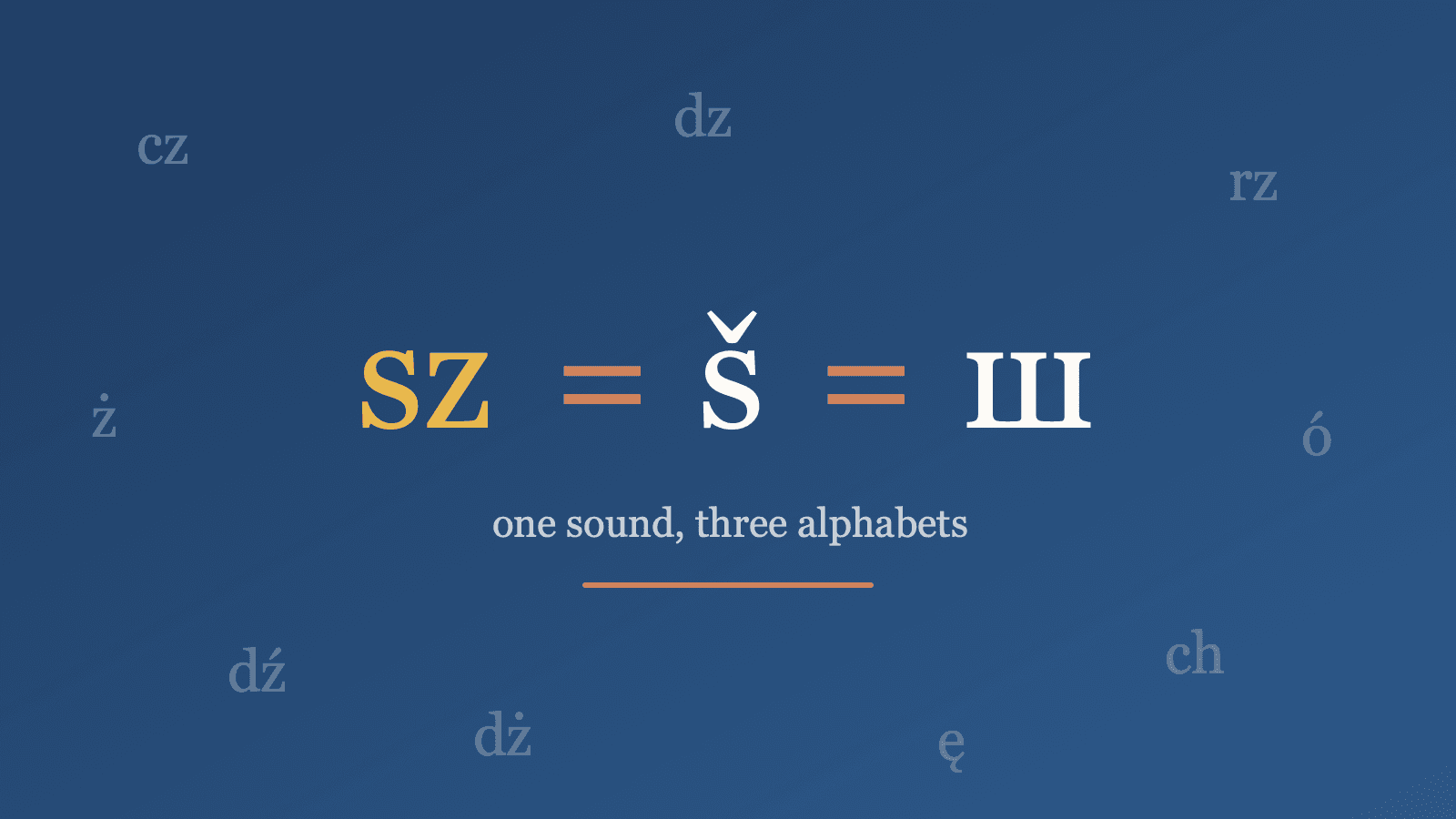
Polish Digraphs Explained: Master sz, cz, rz, and ch
Struggling with Polish spelling? Learn the simple rules behind Polish digraphs (sz, cz, rz) and discover why Polish consonant clusters are easier than they look.
Russian Word Stress Explained
Master Russian word stress: why it's free and mobile, how it drives vowel reduction (akanje), and how to stop guessing and pronounce words like a native.
Serbian Verb Aspect Explained
Master Serbian verbal aspect. Learn the difference between perfective and imperfective verbs, the prefixes and rules, and how to choose the right one every time.
The Cyrillic Alphabet Explained
Demystify the Cyrillic alphabet. Discover its surprising history, break down the letters into easy-to-learn categories, and explore pan-Slavic differences.
Polish Verb Aspect Explained
Struggling with Polish verb aspect? Learn the difference between imperfective and perfective verbs, how to form them, and how to master them without the stress.
The Russian Dative Case
Master the Russian Dative case. Learn how to express age, feelings, indirect objects, and the difference between К and В/На without the stress.
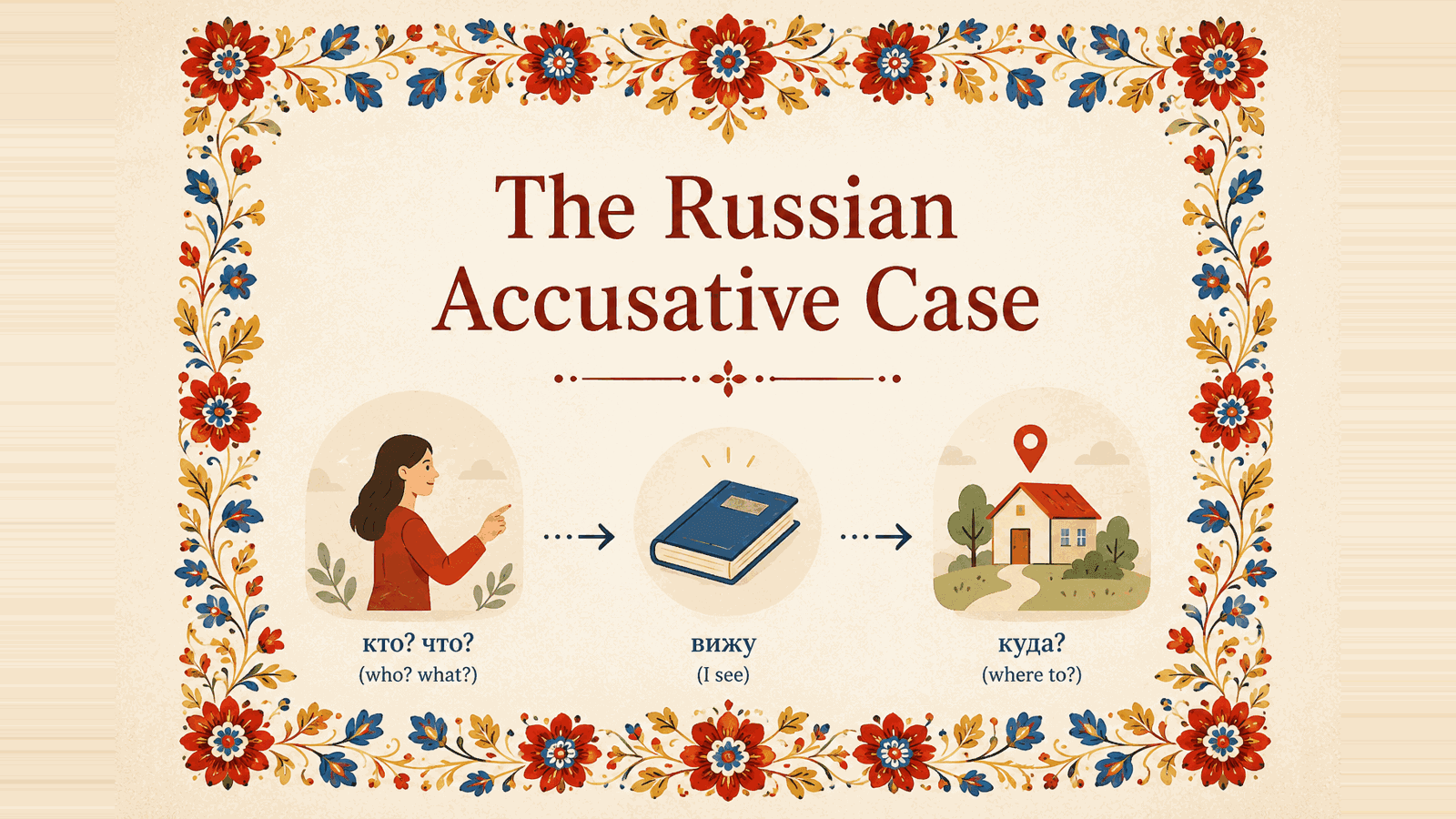
The Russian Accusative Case
Learn how the Russian Accusative case works. Understand direct objects, the rules of animacy, destinations, and how to master the feminine -у ending.
The Russian Genitive Case
Master the Russian Genitive case. Learn how to express possession, negation, and quantities without memorizing endless grammar tables. A guide for all learners.
The Russian Nominative Case
Learn how the Russian Nominative case works, how to identify noun genders, form plurals, and avoid common beginner mistakes. A must-read grammar guide.