
Language Overview
Serbian
Српски
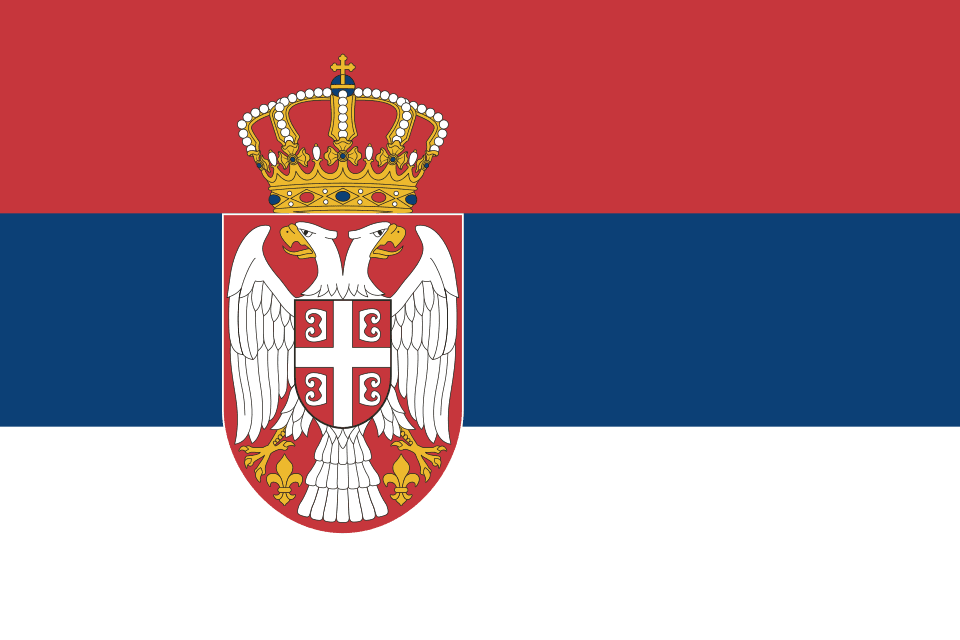
Serbian is a South Slavic language with about 12 million speakers, unique for being written in both Cyrillic and Latin scripts.
Overview
Serbian is a South Slavic language spoken primarily in Serbia, Bosnia and Herzegovina, and Montenegro. It is mutually intelligible with Croatian, Bosnian, and Montenegrin.
Alphabet
The Serbian alphabet
Thirty sounds, with a one-to-one Cyrillic and Latin twin for each.
Native-speaker recordings are still being prepared.
Looks like Latin B — but always sounds “v”.
One of the Serbian six — the Ђ in Ђоковић.
Never the English “j” — ја (I) sounds like “ya”.
One of the Serbian six — Latin writes it Lj.
Looks like Latin H — but always sounds “n”.
One of the Serbian six — Latin writes it Nj.
Can act as a vowel: прст (finger) has no other one.
Looks like Latin C — but always sounds “s”.
One of the Serbian six — it ends every -ић surname.
Looks like Latin Y — but always sounds “oo”.
Looks like Latin X — but always a breathy “h”.
Never a “k” sound — Latin C is always “ts”.
One of the Serbian six — Latin writes it Dž.
Sound Features
Serbian features:
- Pitch accent system (rising and falling tones)
- Simple vowel system with 5 vowels
- Lack of palatalization compared to other Slavic languages
- Phonetic spelling - words are written as they sound
Key Grammar Highlights
Serbian grammar includes:
- Seven grammatical cases
- Three grammatical genders
- Verb aspect system
- Rich system of verbal tenses
Related Languages
Serbian is closely related to Croatian, Bosnian, and Montenegrin. These languages are sometimes collectively referred to as Serbo-Croatian.
Basic Phrases
- Hello: Здраво / Zdravo
- Thank you: Хвала / Hvala
- Yes: Да / Da
- No: Не / Ne
- Please: Молим / Molim
Resources
- Serbian language courses
- Serbian media and literature in both scripts
- Language exchange programs
- Online dictionaries and grammar resources